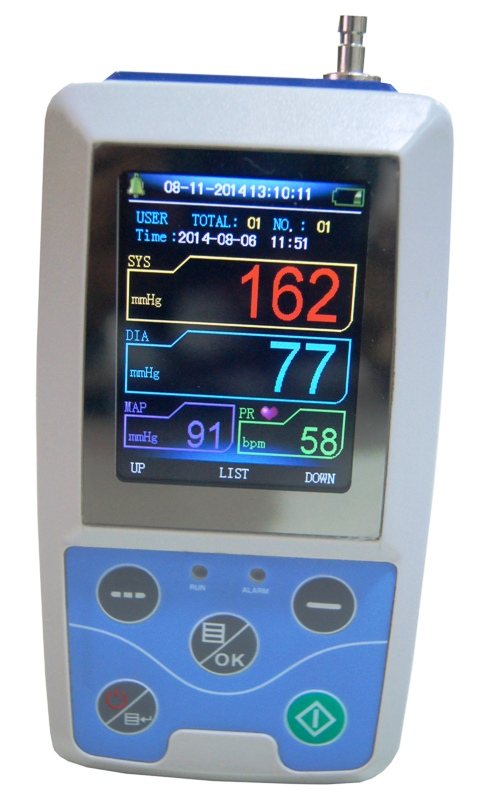
Ambulatory BP Monitor ABPM50"
Ambulatory blood pressure monitoring (ABPM) is being increasingly recommended for routine clinical practice. It may be particularly useful in evaluating the patient with variable blood pressure readings in the office, or the patient with wide discrepancies between the blood pressure readings at home and the clinician's office (ie, "white coat" hypertension). ABPM and, in particular, nocturnal blood pressure readings, may also provide prognostic data.
Ambulatory blood pressure (ABP) monitoring involves measuring blood pressure (BP) at regular intervals (usually every 15–30 minutes) over a 24 hour period while patients undergo normal daily activities, including sleep. .
What are the indications?
• Suspected white-coat hypertension (including in pregnancy)
• Suspected masked hypertension
• Suspected nocturnal hypertension or no night time reduction in BP (dipping)
• Hypertension despite appropriate treatment
• Patients with a high risk of future cardiovascular events (even if clinic BP is normal)
• Suspected episodic hypertension
• Prolonged Diabetes
Supplied with unit, Adult BP cuff, Wide BP cuff for obese patients and software.