The Ewing theory, specifically the Ewing's battery of tests, is a foundational method for diagnosing cardiac autonomic neuropathy (CAN). This condition, often a serious complication of diabetes, involves damage to the nerves that regulate the cardiovascular system. The Ewing tests use simple, non-invasive maneuvers to assess how heart rate and blood pressure variability respond to different stimuli.
Ewing's Battery of Tests
The Ewing theory posits that the progression of CAN, can be detected by analyzing a series of five tests that assess both the parasympathetic and sympathetic nervous systems. A healthy autonomic nervous system would show a robust, rapid, and appropriate response to these tests, while a person with CAN would exhibit a blunted or abnormal reaction.
The tests include:
• Heart rate variability during deep breathing: Measures the parasympathetic system by observing how heart rate fluctuates between inhalation and exhalation.
• Heart rate response to the Valsalva maneuver: Evaluates both parasympathetic and sympathetic functions by monitoring heart rate and blood pressure changes during and after forced exhalation against a closed airway.
• Heart rate response to standing (30:15 ratio): Assesses the parasympathetic and sympathetic systems by measuring heart rate changes immediately after standing up.
• Blood pressure response to standing: Checks for sympathetic function by measuring the drop in blood pressure when moving from a lying to a standing position.
• Blood pressure response to sustained handgrip: Assesses the sympathetic system by measuring the blood pressure increase during an isometric exercise.
Importance of the Ewing Theory
The Ewing theory and its associated tests are crucial for several reasons:
• Early Detection: The tests can detect early, asymptomatic stages of CAN. This is vital because CAN often has no noticeable symptoms in its initial phase but can progress to life-threatening complications like silent myocardial ischemia (a heart attack without chest pain) and sudden cardiac death.
• Risk Stratification: The results help doctors categorize the severity of CAN. A low score on the Ewing tests indicates a higher risk of cardiovascular events, guiding physicians to implement more aggressive monitoring and management strategies.
• Non-Invasive and Accessible: The tests are simple, non-invasive, and can be performed with basic equipment in a clinical setting.
• Guidance for Treatment: Identifying the specific patterns of heart rate and blood pressure variability helps healthcare providers tailor interventions. This can include optimizing blood sugar control, adjusting blood pressure medications, and recommending lifestyle changes to help slow the progression of the disease.
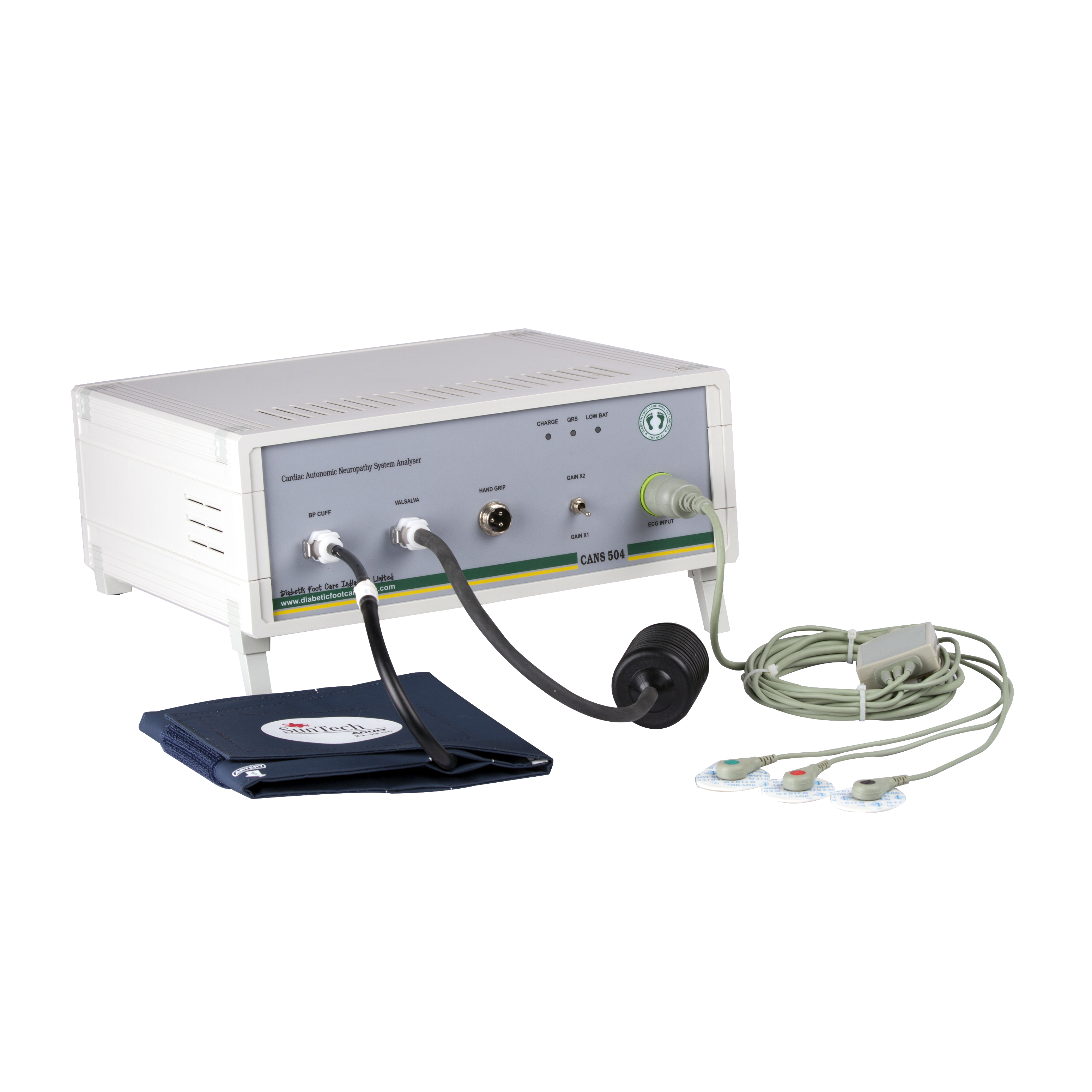
Our Cardiac Autonomic Neuropathy System Analyser model CANS504 is fully based on the above theory and is one of the proven devices in the Indian market. Many scientific papers were published using our CANS504. If you have any queries, please write to elango@diabetikfootcare.com.