Chennai
08048035828
+919382206047
Plantar Pressure Measurement Systems by DFCIndia

Foot Imprinter Harris Mat - FM1111

INR 17800
In stockcod available
Phone Number

08048035828

Please keep 0 before dialling the number.

Email Address mesmedi@gmail.com

Mon-Thu: 10 AM - 2 PM • Fri: 3 PM - 7AM

Other Website Visit our other website
Address 18/1 , 3rd Main Road , Kannappa Nagar

Chennai, India, 600041

Description

Deformity due to the diabetic foot causes repetitive and excessive pressure to certain areas of the foot, which may result in ulcers and pains. Therefore, it is necessary to measure the pressure of the sole for the prevention and management of diabetic foot lesions. Early identification of feet 'at risk' for ulceration is important in preventing plantar lesions in diabetic patients with insensitive feet. Plantar pressures are higher in diabetic neuropathic patients than non-diabetic and non-neuropathic Counterparts. As high plantar pressure is a proven risk factor for foot ulceration, effective screening for high plantar pressures in diabetic patients could have a major influence on the incidence of diabetic foot ulceration. High plantar foot pressure has been identified as a significant risk factor for ulcerations. A large number of studies have suggested that plantar pressures are high in people with diabetic peripheral neuropathy (DPN) and in people with a history of diabetic foot ulcers. Measurement of these foot pressures is possible utilizing a variety of modalities. Several computerized systems can provide quantitative measurement of plantar foot pressure. These measurements are important in identifying areas of the foot at risk for ulceration and possibly in the evaluation of orthotic adjustments. In order to identify high-risk patients in a clinical setting, a simple system for screening is needed which is easy to use, reliable and gives results that are easy to interpret and can be immediately available to both the patient and staff. Our Foot Imprinter Harris Mat FM1111 has been developed as a simple, inexpensive and practical foot pressure measurement device intended for routine clinical use. It is a semiquantitative footprint mat that quantifies plantar pressure by visual comparison between the greyness of the footprint. Features: • Measures and display patient weight disbursement in greyscale • Detects the area of the greatest concern for ulceration • Useful to identify Charcot arthropathy • Arch of the patient can be detected • More the darker color represent the high pressure • Excellent tool for motivating the patient to upgrade to a good footwear • Kit includes FI1111 mat, rubber roller, ink pad, Ink and prescription pad

Other Products

view all

68179d65be22ee500d53ff54 Card 2

product image
Neuropathy Screening Products

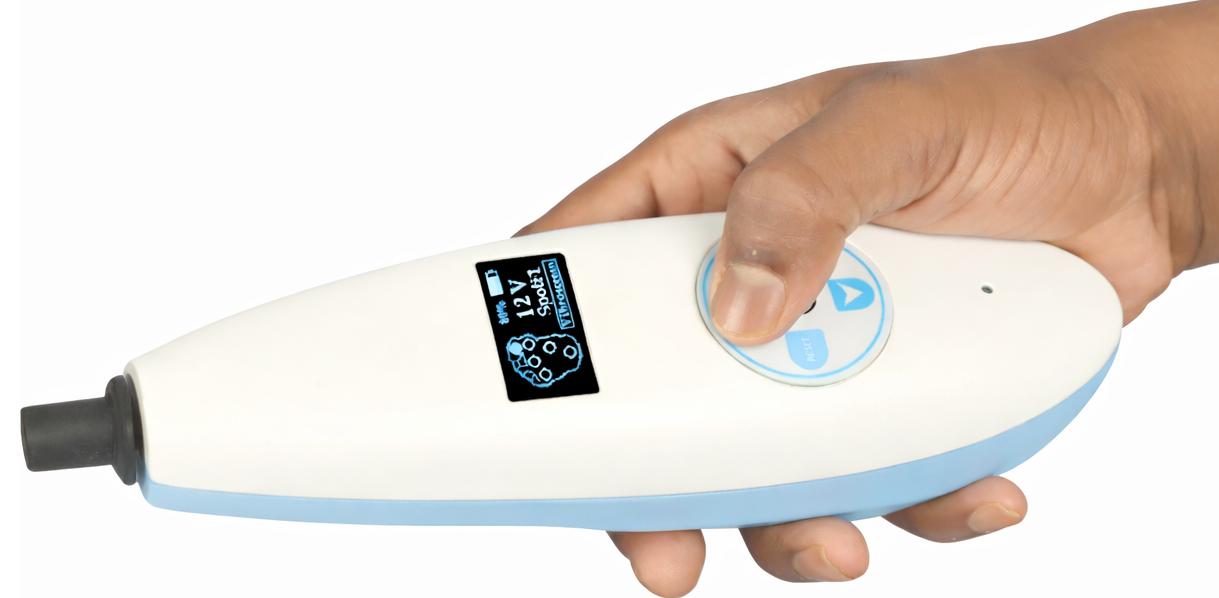
VIBROSCREEN is a next-generation, handheld Biothesiometer engineered for objective assessment of vibration perception threshold (VPT) in patients at risk of Diabetic Peripheral Neuropathy. The device is optimized for point-of-care diagnostics, enabling rapid, reproducible, and operator-independent screening across clinical, community, and domiciliary settings. Its compact, self-contained architecture, combined with digital integration capabilities, supports large-scale neuropathy screening programs and longitudinal patient monitoring. Technical & Functional Specifications: 1. Handheld, Portable Architecture • Compact, lightweight, and ergonomically engineered for single-handed operation • Suitable for bedside evaluation, outpatient clinics, screening camps, and home healthcare delivery • Battery-powered system ensuring complete operational mobility without dependence on mains supply • Probe geometry optimized for accurate application on plantar surfaces 2. Vibration Stimulus Generation • Employs a precision-controlled electromechanical probe for vibration delivery • Operates at a fixed frequency of 128 Hz, aligned with standard clinical protocols for VPT assessment • Factory-calibrated output ensures high reproducibility and inter-device consistency • Designed to stimulate large myelinated Aβ fibers, facilitating early detection of sensory neuropathy 3. Adjustable Stimulus Amplitude (Voltage-Controlled) • Vibration amplitude is directly proportional to applied voltage, enabling graded stimulus delivery • Continuous and incremental voltage modulation allows accurate determination of perception thresholds • Measurement range typically spans 0–30 V, compliant with established clinical screening thresholds • Supports quantitative sensory testing methodology for neuropathy grading 4. Digital Display & User Interface • Integrated high-contrast OLED display for real-time visualization of VPT values • Displays stimulus intensity (Volts) with high resolution for precise documentation • User-friendly interface minimizes operator training requirements and reduces variability 5. Threshold Measurement & Operating Modes • Manual Mode: o Clinician-controlled application of vibration stimulus at standard anatomical sites o VPT values recorded manually in structured clinical documentation formats • Computer/Mobile-Assisted Mode: o Device interfaces with Windows-based systems or Android platforms o Automated test workflows with guided protocols and standardized site sequencing o Real-time data acquisition, storage, and algorithm-based interpretation o Fully functional in offline environments, ensuring usability in low-resource settings 6. Power Management System • Integrated rechargeable lithium-ion battery with USB Type-C charging interface • Optimized for extended field use with low power consumption architecture • Capable of screening approximately 150–200 patients per full charge cycle • Includes battery status monitoring for uninterrupted clinical workflow 7. Smart Connectivity & Data Integration • Embedded Bluetooth Low Energy (BLE) module for seamless wireless data transfer • Enables integration with mobile and desktop applications for: o Patient data management o Longitudinal tracking and trend analysis o Digital report generation • Supports combined neuropathy screening with: o 10 g Semmes-Weinstein monofilament testing (protective sensation assessment) • Designed for interoperability within a broader diagnostic ecosystem, including: o Ankle-Brachial Index (ABI) systems o Plantar pressure distribution and foot risk assessment platforms Clinical Relevance VIBROSCREEN facilitates early identification of loss of protective sensation (LOPS), a critical risk factor for diabetic foot ulceration and amputation. Its deployment in primary care and screening programs enhances preventive foot care strategies and supports evidence-based clinical decision-making.

68179d65be22ee500d53ff54 Card 2

product image
Vascular Screening Products

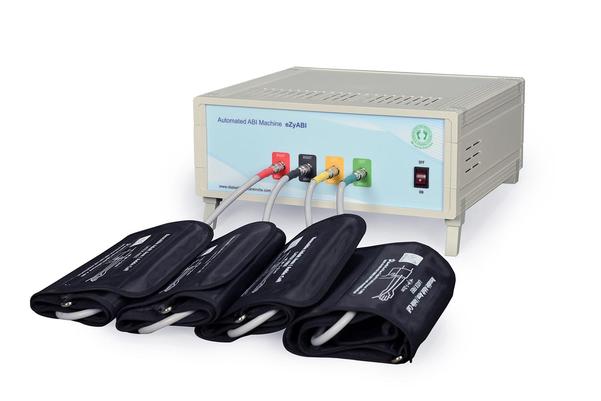
The Ankle Brachia/ Index (ABI) is a non-invasive diagnostic test used to assess peripheral arterial disease (PAD), a common circulatory condition affecting the lower limbs, particularly in individuals with diabetes or cardiovascular risk factors. The automated Oscilometry ABI device revolutionizes this essential vascular screening by combining speed, accuracy, and ease of use, eliminating the need for Doppler and manual calculations. Features: • Oscilometry Technology: Sequential measurement of systolic pressures in the arms and ankles, without the need for a Doppler probe. • Automated Measurement: Fully automated inflation, deflation, and data acquisition ensure minimal operator dependency and high reproducibility of results within 3-4 minutes. • Neural Algorithm: The Advanced Neural Algorithm calculates the blood pressure accurately with minimum variation. • User-Friendly BP cuff: Conical, color-coded BP cuffs help the user. • Built-In ABI Calculation: Automatically calculates ABI ratios and flags abnormal results based on clinical thresholds (e.g., AB/< 0.9 for PAD) • Exercise ABI test is automatically enabled when the resting ABI falls under borderline. The automated Oscilometry ABI device - eZyABI offers a fast, reliable, and accessible method for PAD detection and vascular assessment. It enhances workflow efficiency, reduces operator error, and broadens access to essential vascular diagnostics across primary care, diabetology, and hospital settings.