Chennai
08048035828
+919382206047
Diabetic Foot Evaluation Lab by DFCIndia

Diabetic Foot Evaluation Lab - DIABETIK MINILAB

INR 450000
In stockcod not available
Phone Number

08048035828

Please keep 0 before dialling the number.

Email Address mesmedi@gmail.com

Mon-Thu: 10 AM - 2 PM • Fri: 3 PM - 7AM

Other Website Visit our other website
Address 18/1 , 3rd Main Road , Kannappa Nagar

Chennai, India, 600041

Description

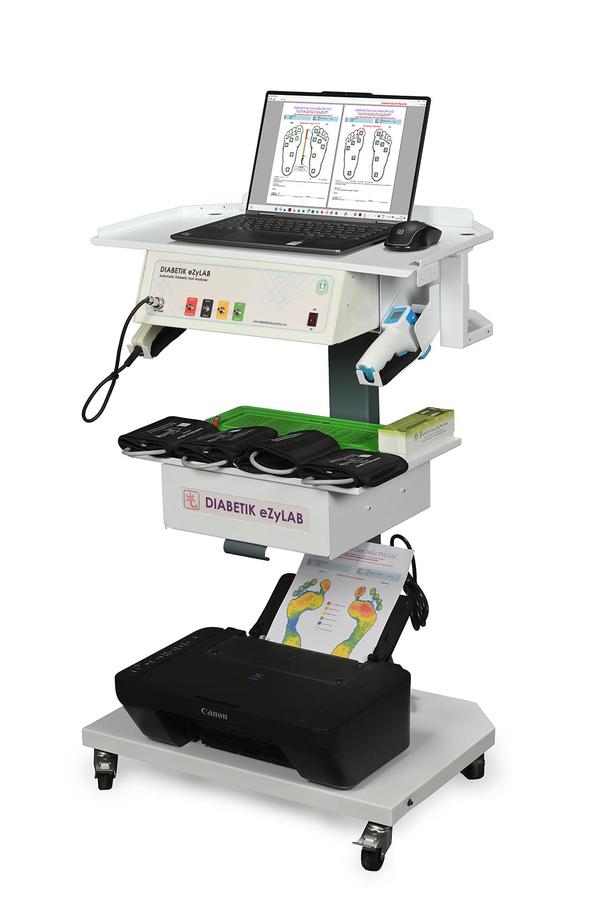
Our All-in-one Complete Diabetic Foot Lab model DIABETIK MINILAB is our one of the best products that can measure and document all the important parameters such as the Ankle Brachial Index(ABI), Toe Brachial Index(TBI), Doppler Waveform, Monofilament 10gm, Biothesiometry, Foot Pressure and Foot Temperature. In addition to the above reports, a master report is created by the software will capture the medical history with symptoms of the patient, dermatological exam, musculoskeletal exam, vascular and footwear exams along with the recorded test results and their interpretations. A colorful 6 pages report is generated by the software. The Diabetik Minilab is supplied with all the accessories and a sturdy trolley. An all-in-one scanner/copier/printer of a particular specification is supplied with the device. A Windows 7/8/10 operated laptop is to be arranged by the buyer. Vascular Screening: Whenever one suspects Peripheral Arterial Disease (PAD), the clinician must perform a few non-invasive vascular testing methods that are commercially available and widely implemented. Features: • Unidirectional 8MHz probe • Photo-plethysmograph PPG Toe sensor • BP cuffs for ABI/TBI • Ankle Brachial Index (ABI) • Toe Brachial Index (TBI) • Doppler Velocity Waveform • Venous Examination (No documentation) • Carotid, Penile examination (No documentation) Neuropathy Screening: Diabetes can result in long-term health complications, with one of the most common being microvascular damage that leads to diabetic neuropathy (DN), which affects multiple body systems and increases amputation risk. A typical form of DN is diabetic peripheral neuropathy (DPN), which is known to be a primary cause of balance issues, and sensation loss in the feet, and a major contributor to nontraumatic lower-limb amputations. Loss of sensation in the foot can be diagnosed with a 10gm Monofilament and a Biothesiometry. Semmes‐Weinstein monofilament test (SWMT): The SWMT is a common screening tool for assessing the sensory function and the loss of pressure sensation (light touch perception). A 10-gm monofilament test (also referred to as the 5.07 monofilament) is the most common in practice. 25 Nos of such monofilament in a box are supplied with the device. The filament is applied to at least six sites on the foot until it buckles, which occurs at 10 g of linear pressure when the patient is asked to detect its presence. If it is not detected on at least four out of six sites, then the protective sensation is considered to be lost. Biothesiometry: Vibration perception threshold (VPT) has been shown to be strongly associated with foot ulceration. VPT determination by using a Digital Biothesiometer has been used to identify peripheral sensory neuropathy and subjects at risk of the foot. Digital Biothesiometer helps us quantitate the threshold and monitor progressive changes or trends on following up testing. Sensory neuropathy increases the risk of foot ulcerations by seven-fold and peripheral arterial disease (PAD) by three folds in people with diabetes. Peripheral neuropathy is the major causal factor in the development of foot ulcerations among diabetic subjects. Early detection of vibration perception threshold (VPT) helps better prevention. Prevention is better than no cure. 50% of all non-traumatic amputations occur in diabetes which is a high-risk group. . Features: • First Company to introduce Digital Biothesiometry in India - 2003 • Digital 0 to 50 Volts indicator • Vibrator with Mute/Check & Record key • Full solid-state design Plantar Pressure measurement: Understanding foot biomechanics is an important component in the evaluation of diabetic foot. The abnormal plantar pressure distribution plays a key role in the formation of plantar calluses and diabetic foot ulcers. Abnormal value of foot pressure, as well as neuropathy, could play an important role in the formation of plantar ulcers independently. Current international guidelines advocate achieving at least a 30 % reduction in maximum plantar pressure to reduce the risk of foot ulcers in people with diabetes. Features: • Foot Imprinter Harris Mat FM1111 • Licensed software to scan and image process FM1111 foot image. • Report to include the footwear measurements. • Multi-color picture image indicates the pressure mapping. IR Foot Temperature measurement: Monitoring of skin temperatures at the foot, along with subsequent offloading can dramatically reduce the occurrence of ulcerations. The defined threshold reported in numerous studies is an asymmetrical difference of 4ºF (2.2°C) between the sites. Because most patients at risk for ulceration are also at risk for Charcot, monitoring foot temperature would be an effective tool. Features: • Simple one-handed operation • Laser targeting • oC / oF select switch, Accuracy +/- 2% • Early marker for Charcot foot • Can reduce the risk of ulceration.

Doppler Probe 8MHz Unidirections Doppler probe
Toe Sensor Photoplethysmogram - PPG for toe pressure and TBI
VPT values 0 to 50 Volts
Plantar Pressure Podiascan using Harris Mat
Trolley Mobile trolley supplied
Computer/Printer Computer and Printer are not supplied

Keywords

Other Products

view all

68179d65be22ee500d53ff54 Card 2

product image
Neuropathy Screening Products

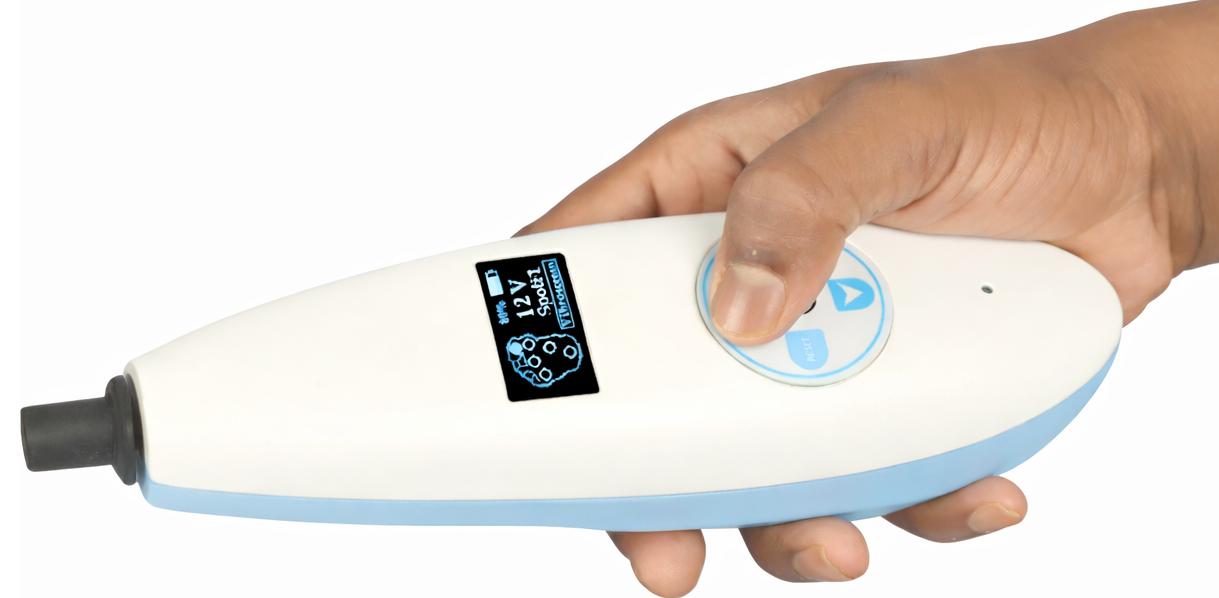
VIBROSCREEN is a next-generation, handheld Biothesiometer engineered for objective assessment of vibration perception threshold (VPT) in patients at risk of Diabetic Peripheral Neuropathy. The device is optimized for point-of-care diagnostics, enabling rapid, reproducible, and operator-independent screening across clinical, community, and domiciliary settings. Its compact, self-contained architecture, combined with digital integration capabilities, supports large-scale neuropathy screening programs and longitudinal patient monitoring. Technical & Functional Specifications: 1. Handheld, Portable Architecture • Compact, lightweight, and ergonomically engineered for single-handed operation • Suitable for bedside evaluation, outpatient clinics, screening camps, and home healthcare delivery • Battery-powered system ensuring complete operational mobility without dependence on mains supply • Probe geometry optimized for accurate application on plantar surfaces 2. Vibration Stimulus Generation • Employs a precision-controlled electromechanical probe for vibration delivery • Operates at a fixed frequency of 128 Hz, aligned with standard clinical protocols for VPT assessment • Factory-calibrated output ensures high reproducibility and inter-device consistency • Designed to stimulate large myelinated Aβ fibers, facilitating early detection of sensory neuropathy 3. Adjustable Stimulus Amplitude (Voltage-Controlled) • Vibration amplitude is directly proportional to applied voltage, enabling graded stimulus delivery • Continuous and incremental voltage modulation allows accurate determination of perception thresholds • Measurement range typically spans 0–30 V, compliant with established clinical screening thresholds • Supports quantitative sensory testing methodology for neuropathy grading 4. Digital Display & User Interface • Integrated high-contrast OLED display for real-time visualization of VPT values • Displays stimulus intensity (Volts) with high resolution for precise documentation • User-friendly interface minimizes operator training requirements and reduces variability 5. Threshold Measurement & Operating Modes • Manual Mode: o Clinician-controlled application of vibration stimulus at standard anatomical sites o VPT values recorded manually in structured clinical documentation formats • Computer/Mobile-Assisted Mode: o Device interfaces with Windows-based systems or Android platforms o Automated test workflows with guided protocols and standardized site sequencing o Real-time data acquisition, storage, and algorithm-based interpretation o Fully functional in offline environments, ensuring usability in low-resource settings 6. Power Management System • Integrated rechargeable lithium-ion battery with USB Type-C charging interface • Optimized for extended field use with low power consumption architecture • Capable of screening approximately 150–200 patients per full charge cycle • Includes battery status monitoring for uninterrupted clinical workflow 7. Smart Connectivity & Data Integration • Embedded Bluetooth Low Energy (BLE) module for seamless wireless data transfer • Enables integration with mobile and desktop applications for: o Patient data management o Longitudinal tracking and trend analysis o Digital report generation • Supports combined neuropathy screening with: o 10 g Semmes-Weinstein monofilament testing (protective sensation assessment) • Designed for interoperability within a broader diagnostic ecosystem, including: o Ankle-Brachial Index (ABI) systems o Plantar pressure distribution and foot risk assessment platforms Clinical Relevance VIBROSCREEN facilitates early identification of loss of protective sensation (LOPS), a critical risk factor for diabetic foot ulceration and amputation. Its deployment in primary care and screening programs enhances preventive foot care strategies and supports evidence-based clinical decision-making.

68179d65be22ee500d53ff54 Card 2

product image
Vascular Screening Products

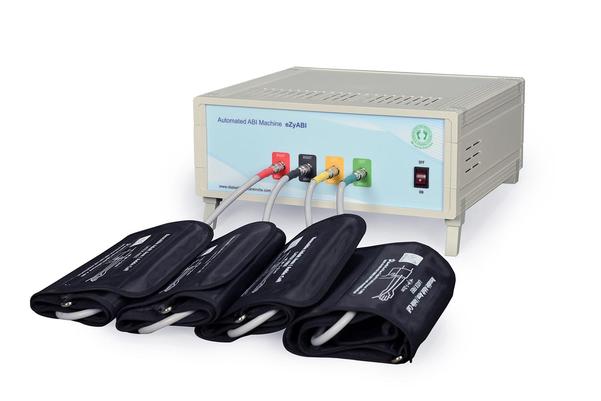
The Ankle Brachia/ Index (ABI) is a non-invasive diagnostic test used to assess peripheral arterial disease (PAD), a common circulatory condition affecting the lower limbs, particularly in individuals with diabetes or cardiovascular risk factors. The automated Oscilometry ABI device revolutionizes this essential vascular screening by combining speed, accuracy, and ease of use, eliminating the need for Doppler and manual calculations. Features: • Oscilometry Technology: Sequential measurement of systolic pressures in the arms and ankles, without the need for a Doppler probe. • Automated Measurement: Fully automated inflation, deflation, and data acquisition ensure minimal operator dependency and high reproducibility of results within 3-4 minutes. • Neural Algorithm: The Advanced Neural Algorithm calculates the blood pressure accurately with minimum variation. • User-Friendly BP cuff: Conical, color-coded BP cuffs help the user. • Built-In ABI Calculation: Automatically calculates ABI ratios and flags abnormal results based on clinical thresholds (e.g., AB/< 0.9 for PAD) • Exercise ABI test is automatically enabled when the resting ABI falls under borderline. The automated Oscilometry ABI device - eZyABI offers a fast, reliable, and accessible method for PAD detection and vascular assessment. It enhances workflow efficiency, reduces operator error, and broadens access to essential vascular diagnostics across primary care, diabetology, and hospital settings.