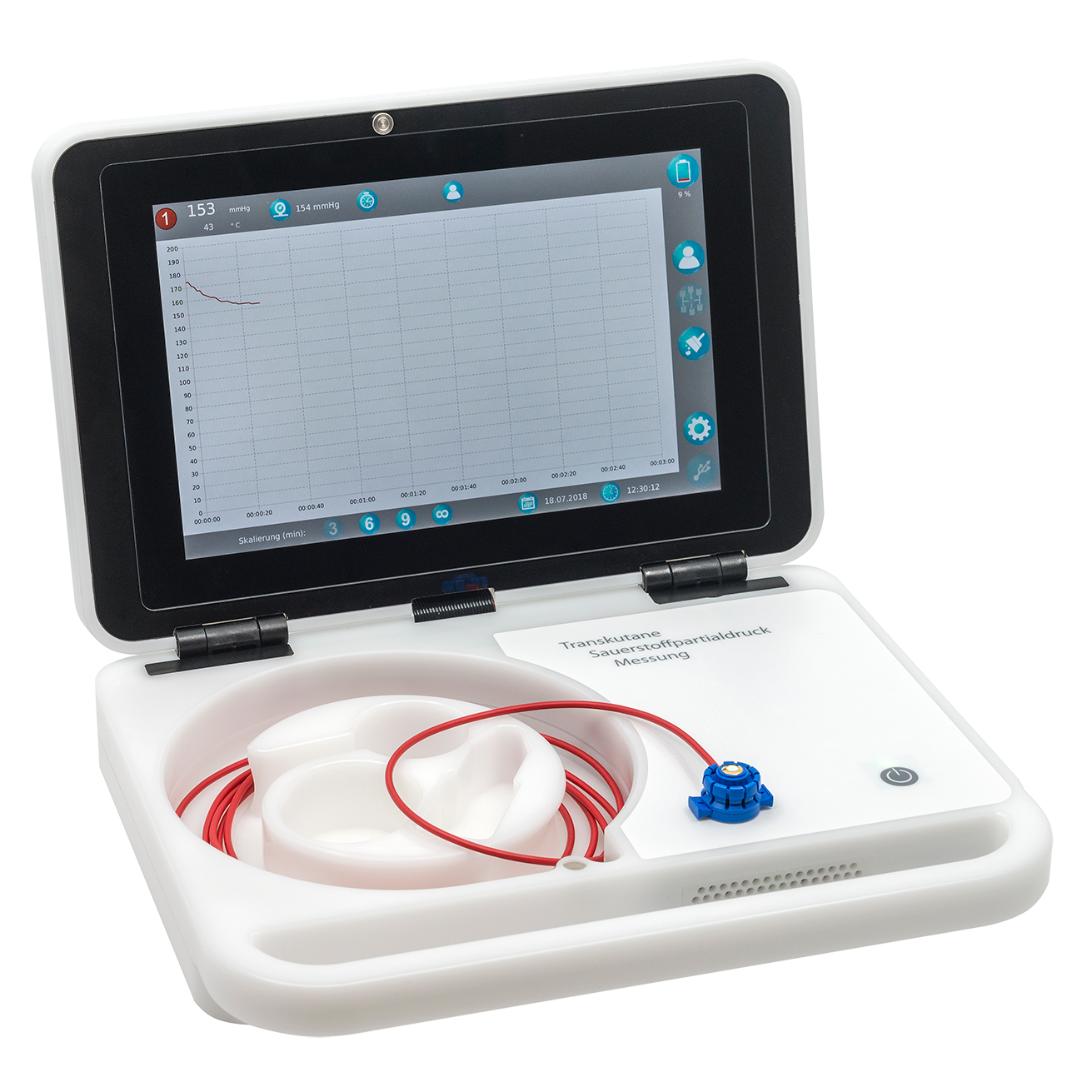
The Precise 8001 tcpO2 device from Medicap Homecare, Germany, is a single-channel, transcutaneous oxygen monitor. It uses a non-invasive method to measure the partial pressure of oxygen (tcpO2) on the surface of the skin. This measurement is crucial for assessing tissue oxygenation and is particularly valuable in the context of diabetic foot care.
How it Works?
The device uses a specialized sensor that is placed on the skin, typically on the foot. The sensor warms the skin to a controlled temperature (around 44°C) to cause vasodilation, increasing blood flow to the area. This allows the dissolved oxygen in the capillaries to diffuse through the skin to the sensor, which then measures the oxygen partial pressure. The Precise 8001 uses a modern, optical measurement method based on fluorescence, which is a key advantage as it is time-saving and does not require frequent sensor calibration or the use of membranes and electrolytes.
The Use and Role in Diabetic Foot Management
The primary role of the Precise 8001 tcpO2 device is to provide a critical assessment of tissue perfusion and oxygen supply, which are fundamental to wound healing. For a patient with a diabetic foot, this information is invaluable:
1. Predicting Wound Healing Potential: The most important use of the tcpO2 measurement is to predict whether a diabetic foot ulcer (DFU) is likely to heal. A high tcpO2 reading (typically above 40 mmHg) indicates good oxygen supply to the tissues, suggesting that the ulcer has a high potential to heal. Conversely, a low tcpO2 value (e.g., below 25-30 mmHg) indicates poor blood supply (ischemia), which makes spontaneous healing unlikely. In such cases, the wound will likely require medical or surgical intervention to improve blood flow.
2. Determining Amputation Levels: In cases where a limb must be amputated, a tcpO2 measurement can help a surgeon determine the most appropriate level for the amputation. By measuring tcpO2 at different points on the limb, the surgeon can identify a site with sufficient oxygen supply to ensure the wound will heal properly after the surgery, thus preventing the need for a higher, more extensive amputation.
3. Assessing Peripheral Arterial Disease (PAD): Diabetic patients are at a high risk of developing PAD, a condition where arteries narrow and reduce blood flow. Since the tcpO2 measurement is a direct indicator of microcirculation, a low reading can be a key sign of significant PAD, even in patients who may have misleadingly high readings on other tests (like the ankle-brachial index) due to calcified arteries.
4. Guiding Treatment Decisions: The device helps physicians make informed treatment decisions. For a patient with a non-healing ulcer and low tcpO2 readings, the physician may decide to refer the patient for revascularization surgery to improve blood flow. The device can also be used to evaluate the success of such procedures by showing an increase in tcpO2 values post-surgery.
5. Suitability for Hyperbaric Oxygen Therapy (HBOT): The device is also used to assess a patient's potential response to HBOT, a treatment that involves breathing pure oxygen in a pressurized chamber. An increase in tcpO2 during a test with supplemental oxygen can indicate that the patient is a good candidate for this therapy.
In summary, the Precise 8001 provides an objective and quantitative measure of tissue oxygenation, which is a powerful tool for predicting the healing of diabetic foot ulcers and guiding critical decisions regarding patient management, treatment, and potential amputation.
For more information, please write to us at elango@diabetikfootcare.com