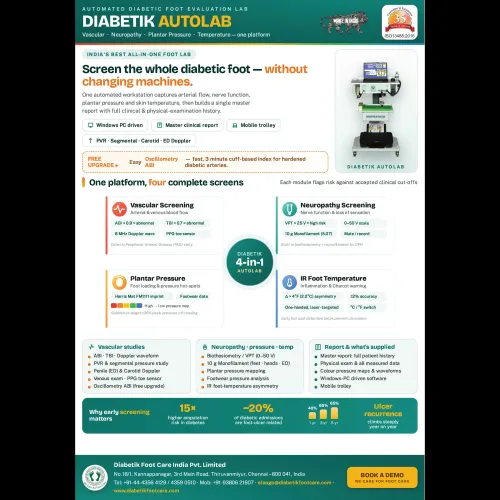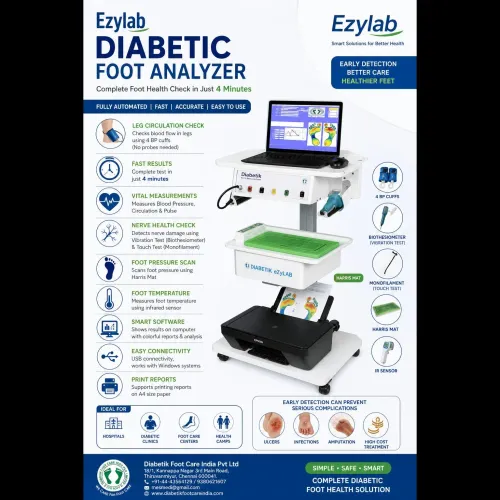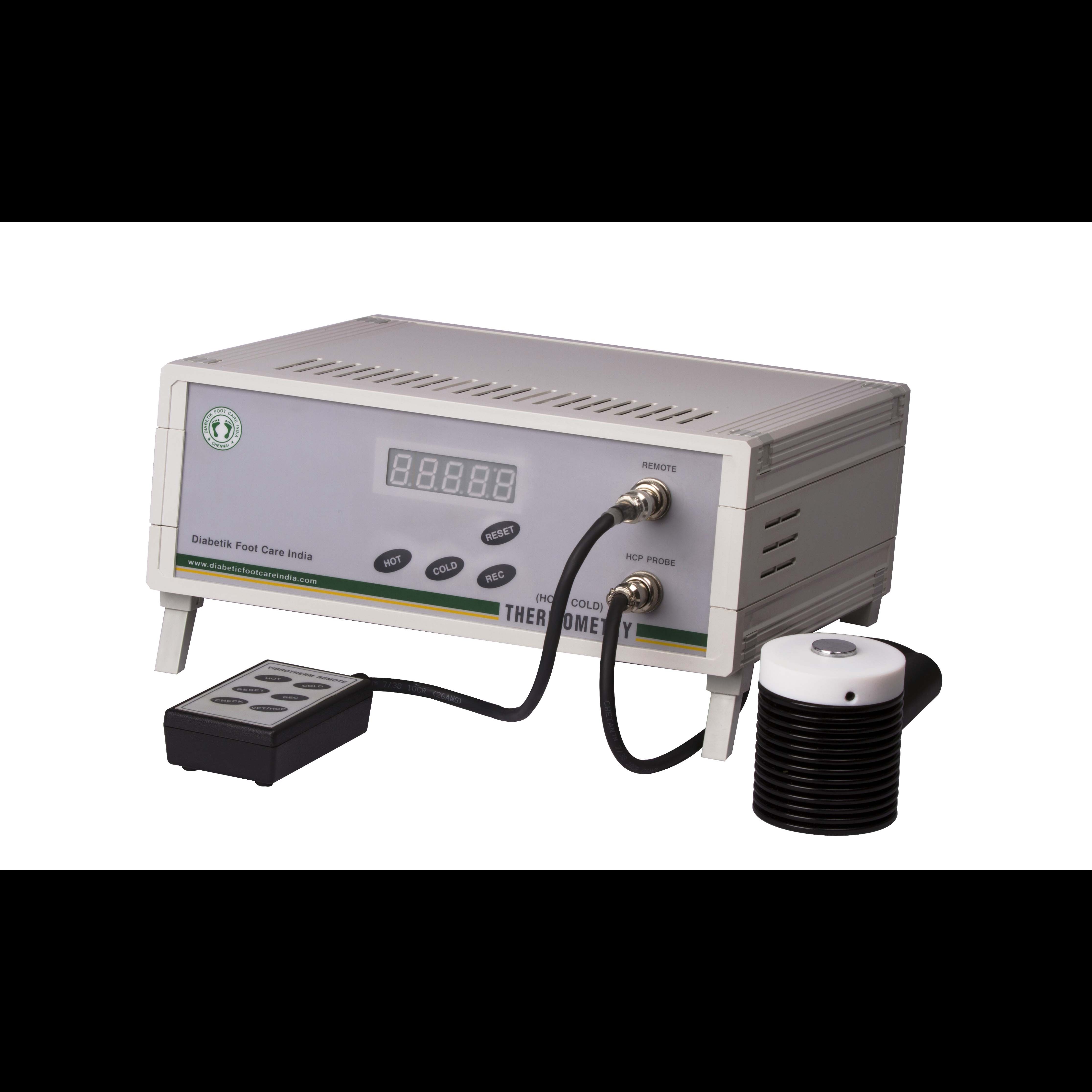
Thermal perception testing, often using a device called a thermal sensory analyser or Thermometry HCP or Vibrotherm Dx device, plays a crucial role in the early detection and management of diabetic neuropathy. While tools like the monofilament and Biothesiometer primarily test large nerve fiber function, thermal perception assesses the function of small nerve fibers (Aδ and C fibers).
How it Works?
A thermal sensory analyser is a device with a metal thermal probe that can be precisely heated or cooled. The test is performed by placing the probe on a specific area of the foot. The device is programmed to gradually change the temperature (either increasing for “warm perception“ or decreasing for “cold perception“) from a neutral baseline. The patient is instructed to respond as soon as they feel a temperature change. The temperature at which the patient felt the change is recorded as the thermal perception threshold.
A higher threshold (meaning the temperature had to be changed more dramatically for the patient to feel it) indicates a decreased ability to perceive hot or cold, a key sign of nerve damage.
The Role of Thermal Perception in Diabetic Neuropathy
Thermal perception testing is a vital component of a comprehensive diabetic neuropathy assessment for several reasons:
• Early Detection of Small Fiber Neuropathy: The small nerve fibers are often among the first to be damaged in diabetic neuropathy. Since they are responsible for transmitting pain and temperature sensations, a loss of thermal perception can be an indicator of nerve damage even before a patient experiences numbness or a loss of protective sensation (which is primarily tested by the monofilament).
• A Complementary Diagnostic Tool: While the 10g monofilament and Biothesiometer are excellent for detecting large fiber neuropathy, they can miss cases of isolated small fiber neuropathy. Thermal perception testing fills this gap, providing a more complete picture of the patient's nerve health.
• Identifying Patients at Risk of Ulceration and Burns: Patients who have lost the ability to feel temperature changes are at a significant risk of accidental burns or cold-related injuries. They may not be able to feel if their foot is too close to a heater or if bath water is dangerously hot, leading to severe burns that they cannot feel, which can then turn into ulcers.
• Guiding Treatment and Monitoring Progression: The quantitative data from a thermal perception test allows physicians to:
o Establish a baseline to track the progression of the disease over time.
o Evaluate the effectiveness of new treatments or interventions aimed at managing neuropathy.
o Reinforce patient education on foot safety and the importance of regular inspections.
In essence, thermal perception testing adds another critical layer to the diagnostic process for diabetic neuropathy. Assessing the function of small nerve fibers, it helps physicians catch nerve damage at its earliest stages, allowing for proactive interventions that can significantly reduce the risk of foot ulcers and other debilitating complications.
We offer the thermal perception testing device as THERMOMETRY HCP or as VIBROTHERM Dx, along with a Biothesiometer built in. To know more about them, please write to elango@diabetikfootcare.com.